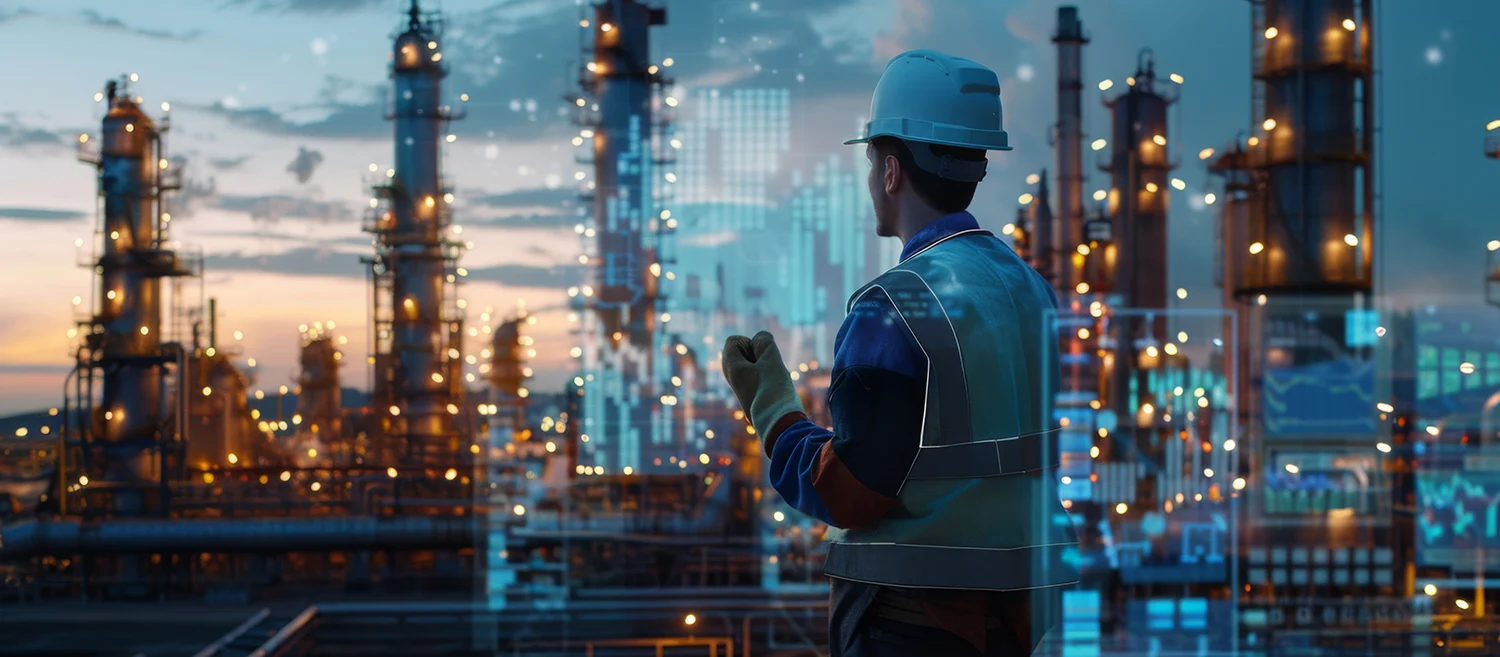
Industry 4.0 transformed industrial operations through automation, real-time analytics and digital connectivity. Its apex was the "lights-out factory" – a fully autonomous facility driven by robotics, machine learning and high-frequency data. This vision promised consistency, cost savings and safety.
Yet, in optimizing for efficiency, many systems sidelined the qualities that make industrial performance resilient: human adaptability, intuition and creativity. The pursuit of total efficiency exposed a paradox. Technically precise systems often struggle to handle unexpected conditions, ambiguity or novel problems without human intervention.
The paradox of automation
Industry 4.0 systems, often engineered by IT, engineering and operations teams, prioritized machine optimization over human agency. Connected workers became monitors of automation rather than drivers of value. Their roles narrowed, defined by digital workflows and reactive tasks, often serving as the human bridge to fully automated processes.
This shift delivered technical productivity but at a human cost:
Cognitive Fragmentation: Constant alerts and context switching overload attention.
Reduced Autonomy: Decision-making latitude diminished as processes became more structured.
Engagement Erosion: Skilled workers relegated to passive oversight, limiting pride and purpose.
Efficiency rose, yet innovation, resilience and long-term adaptability, all the capabilities rooted in human judgment, declined.
Integrating impacts on work density and work intensity
During Industry 4.0, core automated workflows embedded connected workers to optimize industrial processes. While these systems improved efficiency and precision, they often disrupted the human capabilities needed for focus, engagement and creativity.
Impacts on work density: structure, focus and cognitive load
Work density is the scaffolding of performance. It represents how well tasks are structured to support flow.
Several common automated systems illustrate how technology can both improve work density and introduce new challenges:
Project management systems clarify priorities but can also create overload and reduce autonomy. The future human role shifts toward strategic planning, prioritization and workflow design.
Asset management platforms deliver precision but can pull workers into reactive loops. Human expertise becomes increasingly valuable for predictive interventions, exception handling and resource allocation.
Real-time data systems increase visibility but can generate constant noise. Workers must move beyond monitoring to analytical synthesis, trend identification and scenario planning.
Impacts on work intensity: energy, engagement and purpose
Work intensity is the spark that ignites the cognitive and emotional energy that fuels contribution.
Technology also influences how workers engage with their responsibilities:
Collaboration tools can amplify interruptions and unnecessary communication. Human contribution is better focused on facilitation, mentorship and creative problem-solving.
Quality management systems can bypass human judgment, eroding pride and craftsmanship. The opportunity is to elevate workers' roles in continuous improvement, coaching and process innovation.
These impacts suppress creativity, reduce motivation and disconnect workers from the purpose of their work. In short, Industry 4.0's core workflows optimized efficiency and precision rather than promote or elevate human potential. To support both focus and engagement, connected worker solutions must enhance work density and work intensity, so humans remain central to industrial performance.
A human counterbalance
History shows that every industrial revolution triggers a human renaissance. Mechanization required quality control and exposed the value of craftsmanship; Industry 4.0 revealed a similar need: re-centering human creativity, judgment and care at the core of digital operations. Automation alone cannot achieve sustainable performance or realize human potential. In Industry 5.0, automation must work in partnership with humans.
Industry 5.0: elevating human work
Industry 5.0 moves beyond pure automation toward true human-machine collaboration, elevating work that must remain human.
This includes two important types of work:
Insight-driven work: Problem-solving, analysis, strategic decision-making and troubleshooting.
Emotionally driven work: Empathy, collaboration, judgment and creativity.
Technology doesn't replace humans; it amplifies uniquely human capabilities, enabling workers to contribute at a higher cognitive and strategic level.
Connected worker solutions: from monitoring to mastery
Industry 4.0 positioned humans as overseers. Their focus was to watch, react and navigate complexity from the sidelines. Industry 5.0 flips that script.
Connected worker solutions now elevate humans from passive monitors to active orchestrators of insight, creativity and impact:
Real-time intelligence becomes strategic foresight. Workers don't just receive alerts. Industry 5 requires higher-order skills to interpret patterns, anticipate disruptions and guide adaptive decisions that shape operations and innovation.
Contextual data becomes creative fuel. Instead of reacting to fragments, workers synthesize across systems. Humans will reframe problems, explore scenarios and apply judgment in ambiguity.
Automation becomes cognitive liberation. By offloading repetitive and data-heavy tasks, humans reclaim bandwidth for innovation, mentoring and cross-functional collaboration.
The density–intensity dilemma
Modern workplaces face a paradox: technology boosts output but can drain human energy.
The 2023 Asana Anatomy of Work Global Index illustrates the challenge. The research found that workers lose time to unnecessary meetings, frequent application switching and repetitive tasks. For example, the report highlighted 3.6 hours lost per week to unnecessary meetings, 10 applications used per day and 62% of the workday spent on repetitive, mundane tasks.
These inefficiencies illustrate how technology-centered workflows can strain cognitive, creative and emotional capacities, undermining both work density and work intensity.
The findings reinforce the importance of designing work around human needs rather than efficiency alone. Without that balance, organizations risk limiting the very capabilities that Industry 5.0 seeks to elevate.
High-impact drivers of human-centered excellence
Work-design research suggests that a relatively small set of job and task characteristics can have a significant influence on meaningful outcomes related to work density and intensity.
For connected worker solutions, the priority is to design work that provides clear structure without sacrificing autonomy, supports focus without overwhelming attention and encourages meaningful engagement rather than passive monitoring.
Applying the 80/20 heuristic, organizations can prioritize the design elements that have the greatest influence on both performance and engagement. The goal is not simply to introduce more technology, but to ensure that technology helps people perform their work more effectively and find greater purpose in their contributions.
The flow state compass
The flow state compass maps work density against work intensity, illustrating how structure and engagement work together to influence performance.
When work density is high but intensity is low, workers may have clear processes and priorities but lack the energy or motivation to contribute creatively. Conversely, high intensity without sufficient structure can lead to enthusiasm and effort that are undermined by distractions, competing priorities or unclear direction.
When both work density and work intensity are low, workers may struggle with disengagement and limited productivity.
The ideal state occurs when high work density and high work intensity come together. In this environment, workers benefit from clear priorities and well-structured tasks while remaining energized, engaged and empowered to apply their expertise.
This balance creates the conditions for flow, where people can focus deeply, solve problems creatively and contribute at their highest potential.
Conclusion: from automated efficiency to human energy
Industry 5.0 redefines productivity not as control, but as clarity, connection and care. By designing for high work density and work intensity, organizations reach flow states that elevate innovation, resilience and well-being.
The future of industrial operations isn't lights-out; it is lit by human insight. Machines ensure efficiency, humans define value and together they achieve outcomes neither could accomplish alone. Automation without human elevation is optimization without soul.