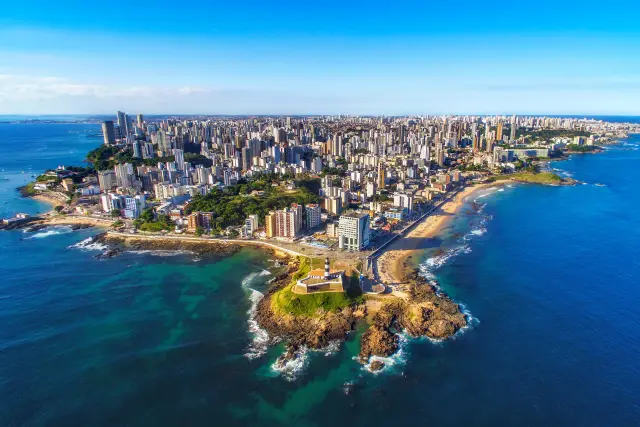
Rio de Janeiro is subject to climatic instabilities and extreme natural events that put the city’s safety, infrastructure and mobility at risk, affecting more than 6 million people. Plus, Rio is a global tourist hub, hosting dozens of large events every year, including Carnival, which makes the coordination of public services an even greater challenge.
At the beginning of the last decade, Rio suffered the largest climate and geotechnical catastrophe in Brazil’s history, enduring landslides and floods that devastated the city and surrounding areas. This uncovered gaps in coordination between public and private agencies, which motivated the creation of the Rio Operations Center (COR). COR initially used a proprietary incident management system, but, while robust, it had limitations. COR needed a solution that could systematize and automate a wide variety of processes and workflows, as well as integrate and centralize information from different data sources into a single platform for real-time city monitoring.

The Octave platform helped us address data integration challenges and automate complex business rules, making COR operations even more agile and efficient.
The Octave platform helped us address data integration challenges and automate complex business rules, making COR operations even more agile and efficient.
COR selected Octave’s solution for city operations management, combining the event and incident management capabilities of Octave OnCall Security (formerly HxGN OnCall Security | Guardian) with a geospatial business intelligence tool created with Octave Alto Enterprise (formerly M.App Enterprise).
OnCall Security integrates data from sensors, systems, applications, cameras and other data sources into a single platform. Alarms are automatically generated and categorized or created manually or through a chatbot that integrates with the main messaging app used by COR users, supervisors and field agents. Once validated, an alarm is converted into a warning or event and an SOP is triggered and agencies notified. Built on Alto Enterprise, the Painel Rio (Rio Dashboard) provides a map-based, real-time view of the city and displays georeferenced data from alerts and events, allowing COR to monitor ocean-atmospheric data, incidents and disasters, mobility and planned events. Operational stages are defined, indicating how heavily city infrastructure and logistics are impacted. Such information is made available to authorities and the media and shared with the population through social media.