As the world’s leading nuclear operator, EDF plays a central role in the energy transition. The group leads projects supporting a low-carbon energy future, including the continued operation of existing reactors and the construction of new ones, including EPRs (Evolutionary Power Reactors) and SMRs (Small Modular Reactors).
EDF is also continuously upgrading existing nuclear power plants to enhance performance and ensure alignment with the highest safety standards, in full compliance with the requirements of the nuclear safety authorities.
Challenge: Optimizing the design and security of a critical component of nuclear power plants
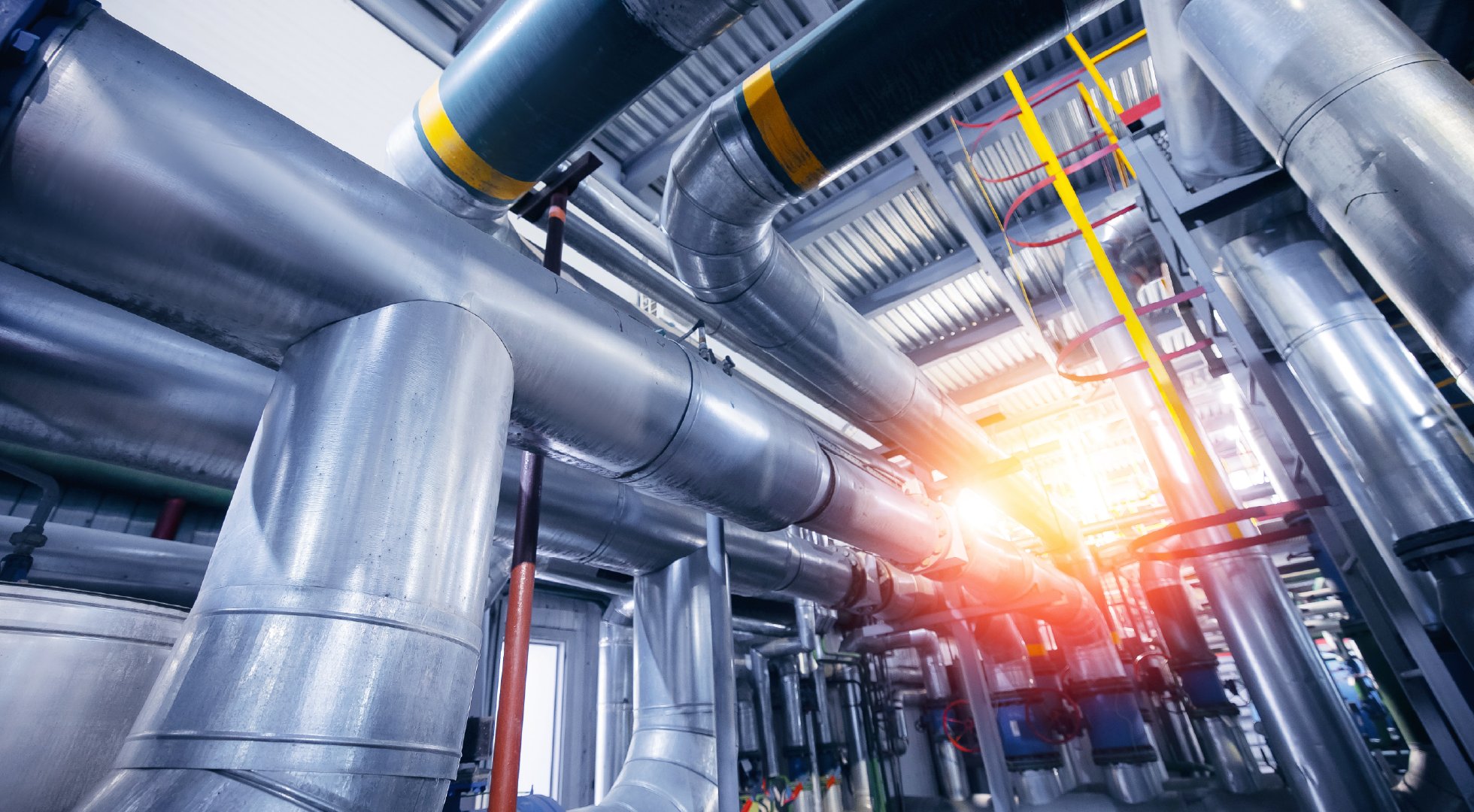
With a team of 2,500 people, the Division of Plant and Environmental Engineering (DIPDE) is at the heart of these efforts. It is responsible for engineering studies, improvement works on the nuclear islands of France’s 56 reactors and provides environmental expertise for all reactors — whether under construction, in operation or being decommissioned. Among the improvement projects, piping systems are also a key area of focus.
“Today, within the Plant and Environmental Engineering Division, we use 150 Aspect Nuclear Pipe Stress licenses shared between our employees and partners. The tool is used to verify the integrity of our piping systems in compliance with nuclear calculation codes and standards,” explains Calculations Team Lead, Nabil Skandre.
“Within EDF teams, we’ve developed strong expertise in using the software, allowing us to optimize our models and methodologies, reduce conservative assumptions and gain additional calculation margins. We also maintain a close relationship with Octave which ensures the tool evolves in line with the latest applicable standards — while continuing to meet our user needs.”
A solution that also helps to design the future of the nuclear fleet
Aspect Nuclear Pipe Stress (formerly PIPESTRESS) is also widely used on projects that are building the future of the nuclear industry such as Flamanville 3 in France, Jaitapur in India and Hinkley Point C in the United Kingdom.
A project like Hinkley Point C, where EDF constructs two EPR reactors, represents “150 km of piping, 2000 calculations [and] 300 sensitive calculations,” notes Léonard Antoinat, Head of the Calculations and Piping Group within Edvance (a subsidiary of EDF) and Framatome.
“To achieve this, 55 internal engineers and 15 external engineers have used Aspect Nuclear Pipe Stress on a daily basis for four years.”
To be used on such projects, Aspect Nuclear Pipe Stress had to first meet the strict requirements imposed by both EDF and the French authorities: “It is a tool qualified by France’s Nuclear Safety Authority for scientific calculations and verified by EDF, which means that we have audited the code.”
Generalizing good practices delivers significant financial gains
Another key mission Aspect Nuclear Pipe Stress participates in is the enhancing and standardizing best practices regarding piping and support design, within EDF’s existing fleet and for new nuclear projects.
Traditional, unoptimized stress engineering practices typically lead to numerous iterations and avoidable costs — for example, by designing supports that are too large and use excessive reinforcement. Through innovative methodologies such as Sigma+, the group’s technical management aims to generalize best practices, such as decoupling the design of piping and supports, optimizing the engineering sequence and simplifying and streamlining calculations.
“This helps us generate mechanical margins and, as a result, produce economic gains amounting to tens of millions of euros, since it leads to fewer heavy modifications to existing structures, or the need for fewer ad hoc surveys and iterations when producing detailed designs on new projects,” notes Céline Gaudin, Piping Specifications Supervisor within the Technical Direction at EDF.
Céline Gaudin emphasizes in this perspective, the quality of Octave’s software. “We are very satisfied with Aspect Nuclear Pipe Stress and its updates, which allow piping guidelines and reference documents to evolve and address the latest changes in codes and standards.”
Lasting and collaborative relationship, based on common expertise
The relationship between EDF and Octave is further enhanced by Octave's ability to provide high-quality technical support to meet its client’s needs. “The technical support is highly responsive, which is also a deciding factor when choosing a software solution. When we have a question, it’s not rare for us to get answers within a span of minutes to a few hours,” notes Sophien Haddad-Verbeck, a Lead Engineer at EDF’s National Center for the Production of Electricity (CNEPE).
Sophien Haddad-Verbeck also highlights Octave’s ability to support EDF in addressing technical issues. “When working on the topic of stationary waves and how to deal with seismic displacement in tunnels, for example, we worked in close collaboration with Octave. The subject, in addition to being an interesting one, is very important to us and has allowed us to develop study methodologies that have saved us many hours of calculation.”
In this regard, Aspect Nuclear Pipe Stress’ capacity to participate in the digital transformation of the installations is a major strength. Being used both by EDF and its subcontractors and partners, Aspect Nuclear Pipe Stress simplifies collaboration within the sector. Additionally, the calculations carried out in Aspect Nuclear Pipe Stress are now feeding the digital twins of reactors. “Digital Reactor” is a key project spearheaded by EDF to transform the sector.
“Within the technical department, we use Aspect Nuclear Pipe Stress to support operations to help with the justification and verification of piping, flanges and other components, as well as in a consulting capacity, and support the development of new nuclear projects. We are very satisfied with Aspect Nuclear Pipe Stress and its updates, which allow piping guidelines and reference documents to evolve and address the latest changes in codes and standards,” Céline Gaudin, Technical Direction, EDF