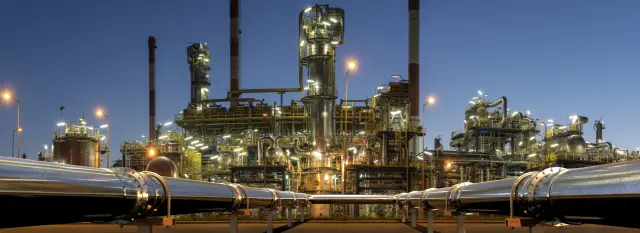
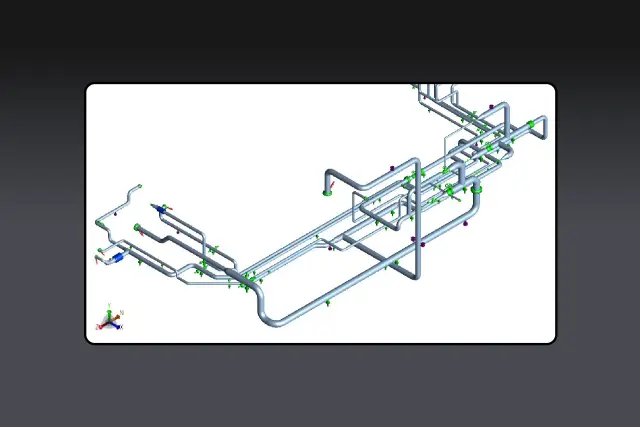
Headquartered in Oslo, Norway, with a global presence, Det Norske Veritas (DNV) is an International Association of Classification Societies organization and one of the world’s largest providers of risk management services to the maritime, oil, gas and energy, food and beverage, and healthcare industries. DNV has worked internationally since 1867.
Identifying goals
DNV Brazil undertook a pressure vessel design verification project for Petrobras to extract natural gas in the Santos Basin, a PMXL1 fixed platform. The project required verification according to ASME VIII Division 1 & 2 2004, addenda 2006 for all classed vessels -plus inspections for further certification involving 40 vessels with design pressures of up to 100 Kgf/cm2.
Overcoming challenges
A main challenge of this two-year project for DNV was dealing with different types of vessels (i.e., heat exchangers, towers, separators) in a short period of time with delays from designers and manufacturers in providing equipment according to schedule.
Realizing results
After the client provided the drawings, DNV input them in the database, created an independent model in Aspect Pressure Vessel (formerly PV Elite), ran the analysis and generated an approval letter for those drawings. The manufacturer then closed the comments and issued a new revision after which DNV issued a Design Verification Report (DVR) describing all the approved drawings, references, correspondences and remarks. Next came the inspection and tests phase, with DNV surveyors using the approved drawings to check compliance with the approved project. Once completed, DNV issued a certificate, concluding the project.
Using Aspect Pressure Vessel, DNV Brazil was able to verify the vessel designs quickly and accurately, which included the approval letter and the DVR. The result was improved approval times.
“Aspect Pressure Vessel helped our project engineers develop new and important pressure vessel skills, and the quick design verification with Aspect Pressure Vessel enabled us have enough time to fix any vessel problems or deviations while it was still in manufacture’s hands,” Rafael Silva, Mechanical Engineer at DNV Brazil added. “This helped avoid rework in the yard.”