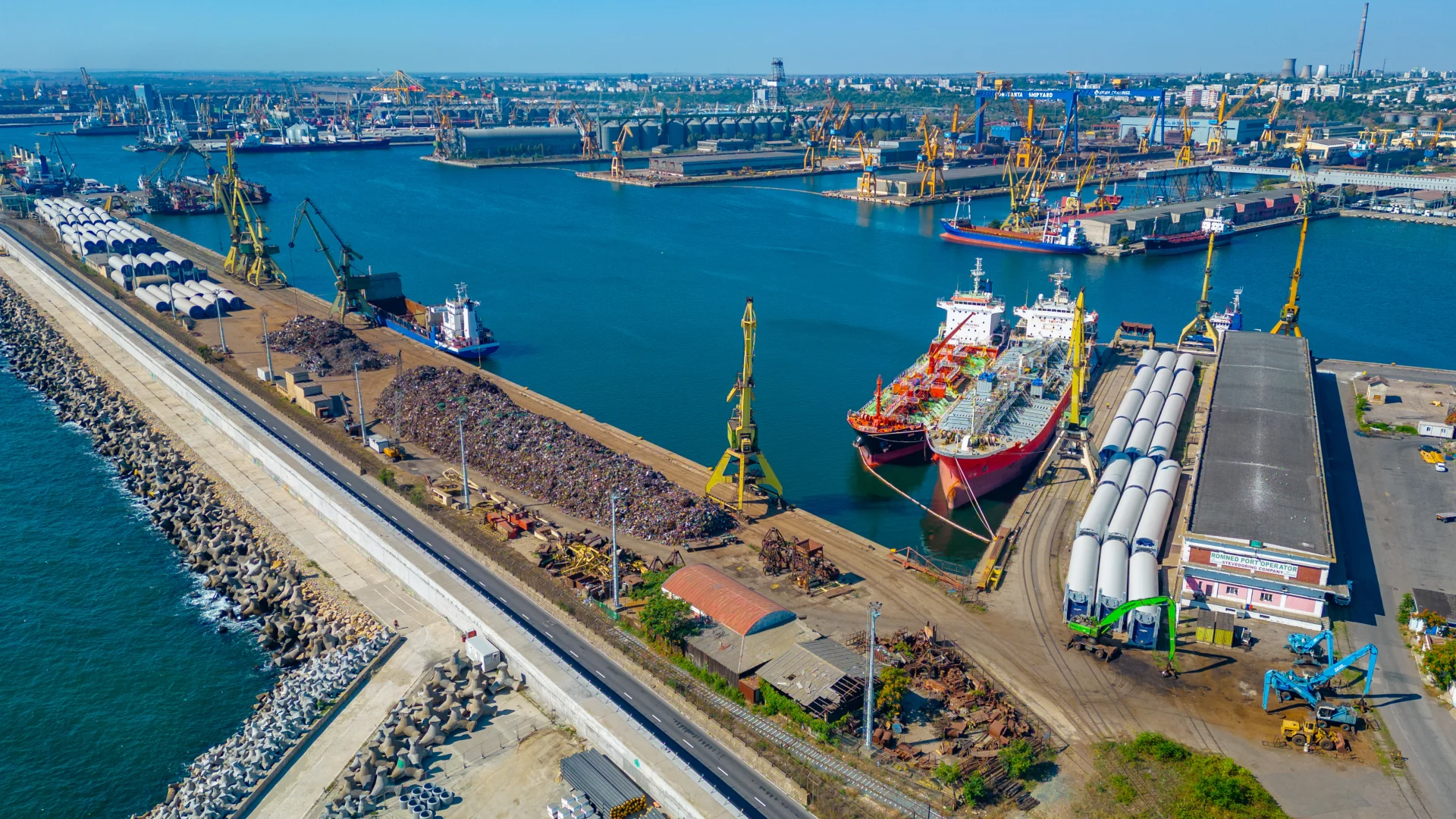
Ports are critical to the global economy, handling more than 80% of the world’s merchandise trade by volume. As trade networks grow more complex and expectations around transparency, safety and sustainability increase, there is an increased need for sustainable port operations.
Industry research also shows that ports with higher levels of digital maturity consistently outperform their peers, particularly in areas like yard operations, vessel handling and coordination across stakeholders. Together, these pressures are pushing port authorities worldwide to rethink how they manage data, infrastructure and decision-making in real time.
Nowhere is this shift more visible than in major gateway ports that drive global trade, regional economies and national infrastructure resilience.
Ports as engines of regional and global stability
Ports serve as the vital intersection of commerce, energy security and geopolitical connectivity. When they operate smoothly, economies move forward. When they do not, disruptions can occur throughout the global economy.
However, many port authorities still rely on fragmented data, static drawings and manual processes that make it difficult to see the full picture or respond quickly to change.
Creating resilience in this environment and enabling sustainable port operations starts with visibility. Leaders need to understand how land use, infrastructure, contracts, regulations and operations connect in real time. Without that shared view, even routine decisions become slow and complex.
Building intelligence into port operations
For example, Romania’s Port of Constanța plays a central role in Black Sea logistics and in connecting Eastern Europe to global trade routes. Managing one of the region’s most important maritime hubs requires constant coordination across departments, partners and regulatory bodies.
To support this complexity and achieve sustainable port operations, the port authority has focused on building a unified geospatial foundation that replaces disconnected tools with a shared operational view. Instead of relying on static drawings and spreadsheets, teams now work from a centralized, role-based environment that brings infrastructure, land use and operational data together in one place.
This approach allows decision-makers to move beyond managing assets in isolation. Land parcels, leases, infrastructure and development plans can be viewed in context, helping the organization align day-to-day operations with long-term strategy.
From compliance to clarity
Regulatory requirements such as the EU INSPIRE Directive are often seen as compliance hurdles. In practice, they can become catalysts for better governance when approached strategically. By standardizing data and ensuring interoperability, port authorities can improve transparency, audit readiness and collaboration with external stakeholders, critical for sustainable port operations.
At Constanța, structured geospatial data has helped strengthen traceability across land use and contractual obligations, while also supporting faster planning and clearer communication with tenants and investors. What begins as a compliance effort becomes a foundation for trust and operational confidence.
A foundation for the smart ports of tomorrow
This kind of digital groundwork is increasingly viewed as a prerequisite for future innovation. Real-time monitoring, advanced analytics and digital twins all depend on accurate, connected and well-governed data. Without that foundation, “smart port” initiatives remain out of reach.
By investing early in integrated geospatial intelligence, port authorities position themselves to evolve alongside the maritime industry and reach the goal of sustainable port operations. They gain the flexibility to respond to shifting trade patterns, climate pressures and infrastructure demands without rebuilding systems from scratch.
The Port of Constanța’s journey reflects a broader global trend. Ports that lead in the next decade will not simply be the largest or busiest. They will be the ones that understand their environments deeply, manage their assets intelligently and use data as a strategic advantage rather than a byproduct.