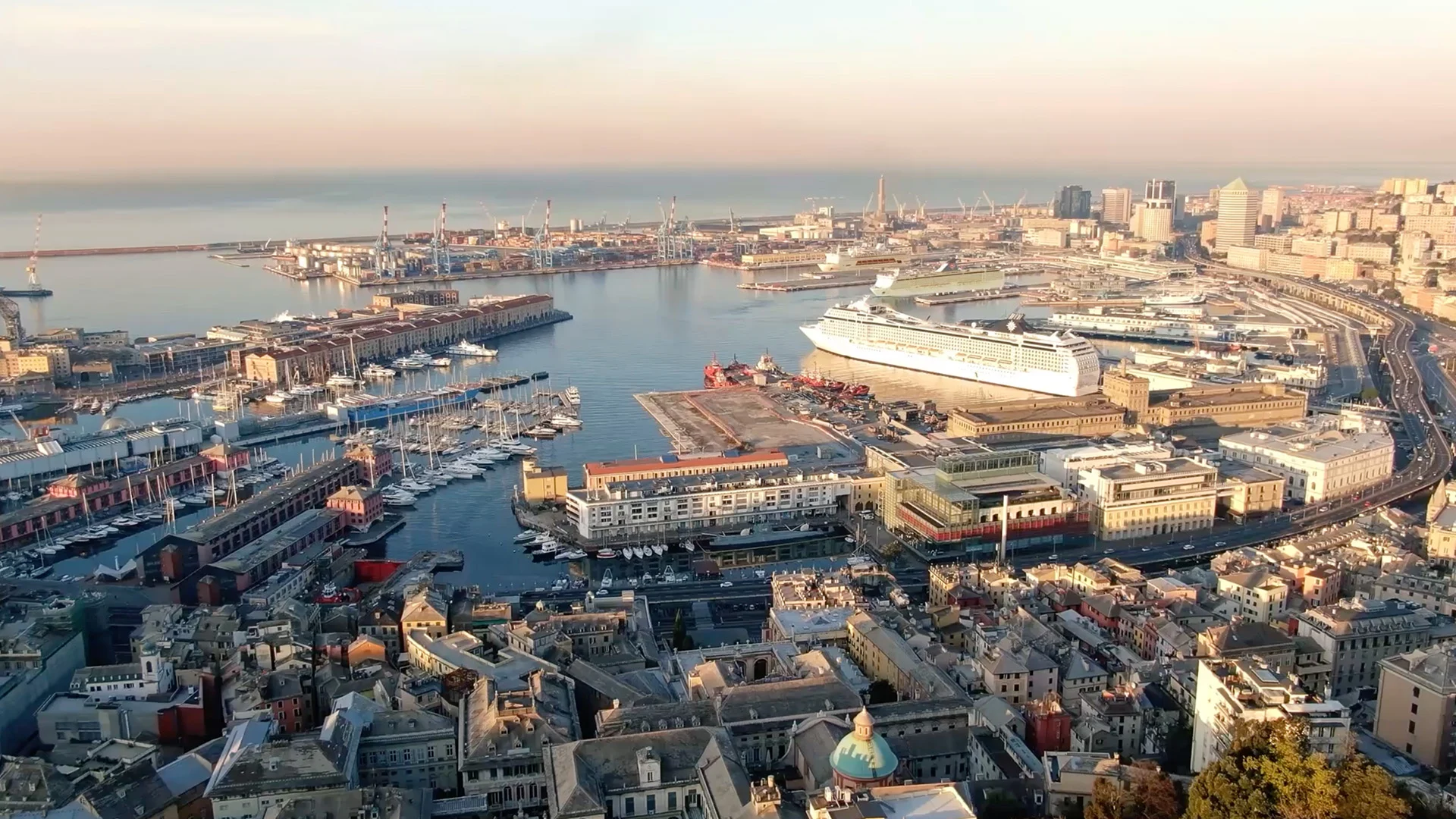
Cities with deep historical roots face the challenge of preserving centuries of cultural heritage while modernizing infrastructure to meet the demands of today’s urban life.
This balance is particularly complex in places like Genoa, Italy, where Renaissance and Baroque architecture coexist with modern infrastructure, tourism pressures and environmental risks.
In cities such as Genoa, the need for better visibility across both above and below ground systems has become essential. Increasingly, these capabilities are being delivered through digital twins and integrated geospatial intelligence capabilities.
A city shaped by history and complexity
Genoa’s historic district, including the UNESCO-recognized Palazzi dei Rolli, reflects the city’s prominence during the 16th and 17th centuries. Today, however, legacy brings added complexity.
Urban planning in this environment requires coordination across departments, systems and stakeholders. Traditional approaches based on static data and siloed workflows are no longer sufficient to manage aging infrastructure, tourism flows and environmental impacts.
To address these challenges, Genoa has long prioritized digital innovation through its Digital City initiative, creating a foundation for more advanced, data-driven decision-making.
Building a connected urban environment
Through collaboration with the START 4.0 Competence Centre and Octave, the City of Genoa has taken a major step forward by developing an integrated urban digital twin.
At the center of this effort is Octave Alto Twin (formerly HxGN Smart Sites), a platform that brings together data from multiple sources into a unified, multiuser environment. This includes reality capture data, live sensor inputs and existing geospatial information, all accessible through a shared interface.
Rather than relying on disconnected tools, city stakeholders can now work from a single operational view that supports coordination across planning, infrastructure and public services.
Connecting above and below ground systems
A key component of this initiative is the “OverUnderGround” project, which integrates georadar, BIM and point cloud data to provide a complete picture of the city.
Using advanced reality capture technologies, teams mapped both surface and subsurface environments without disrupting daily urban activity. Laser scanning and mobile mapping captured the physical structure of the city, while ground penetrating radar revealed hidden infrastructure such as utilities, pipelines and underground networks.
By bringing these datasets together, Genoa can better understand how modern systems interact with historic structures, improving everything from maintenance planning to risk mitigation.
From data collection to real-time insight
The value of a digital twin lies not just in visualization, but also in its ability to support real-time decision-making.
With integrated 3D models and live data inputs, city planners and engineers can monitor conditions as they evolve, rather than relying on outdated information. This enables faster responses to infrastructure issues, more informed planning decisions and improved coordination across departments.
The platform also supports scalability, allowing additional data sources and applications to be integrated over time as city needs evolve.
Expanding impact beyond infrastructure
While the initial focus has been on infrastructure and planning, the benefits of Genoa’s digital twin extend much further.
For example, the city can use real-time data to manage tourism flows in sensitive heritage areas, adjusting access based on crowding or environmental conditions. This helps protect historic sites while improving the visitor experience.
Coordination with the port authority also benefits from this shared visibility. By aligning infrastructure maintenance with incoming tourist activity, the city can reduce disruptions and improve traffic management.
A model for historic cities worldwide
Genoa’s approach reflects a broader shift in how cities think about digital transformation. Rather than focusing on individual technologies, leading cities are building connected systems that bring data, infrastructure and operations together.
For historic urban environments, this approach is especially valuable. It allows cities to preserve what makes them unique while adapting to modern demands with greater clarity and confidence.
As digital twin technology continues to evolve, cities that invest in integrated geospatial intelligence will be better positioned to manage complexity, protect their heritage and plan for the future.