With a rapidly growing population and limited rainfall, Jordan understands the value of water.
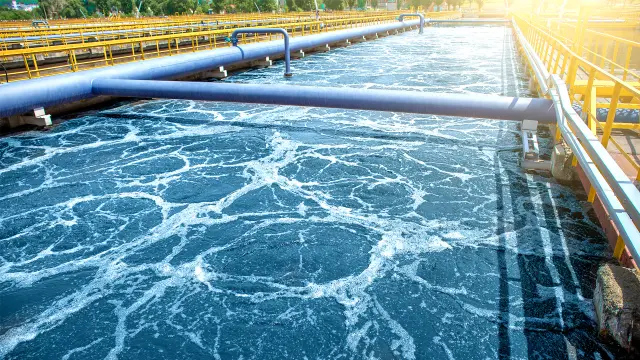
The country has long taken a careful approach in utilizing its scarce water resources, and this was amply demonstrated back in 2006 when the country opened As-Samra Wastewater Treatment Plant, a state-of-the-art facility that serves the capital city of Amman and the neighboring city of Zarqa.
Serving a population of some 3.5 million people, As-Samra was constructed under a 25-year build, operate and transfer (BOT) agreement with the Ministry of Irrigation and Water in Jordan, and is managed by a joint venture between Veolia and Consolidated Contractor Company (CCC).
The plant was one of the first in the world to reclaim energy from turbines powered by the flow of untreated water and biogas, which is the mixture of gases, primarily methane and carbon dioxide, produced by the breakdown of organic matter in the absence of oxygen. Most of the treated water is re-used for farming irrigation in the Jordan valley, putting the plant at the forefront of the government’s sustainability ambitions.
The plant has the capacity to treat 365,000 cubic meters of wastewater daily and is currently running at almost full capacity.
As-Samra’s leadership has also been looking carefully at other means of improving the overall efficiency of the plant, and one of the key areas they isolated was to improve the management of assets.
Complex maintenance requirements
As-Samra’s operation relies on hundreds of thousands of diverse assets, from pipes and pumps to the energy generation systems, site buildings, and moveable equipment, which are worth millions of dollars. The operation to manage and maintain these assets is huge, with 65 staff in the maintenance department, and a significant amount of additional work subcontracted to other companies.
The maintenance is more challenging than a conventional wastewater treatment plant owing to As-Samra’s unique power generation. Indeed, 87% of the electricity used to run the plant is generated by five hydro turbines powered by the flow of wastewater on its 45km downward journey from Amman to the treatment plant in Zarqa, along with 10 biogas generators that extract methane from the wastewater. This extensive power generation technology, and the fact that wastewater rather than clean or grey water is used to run the turbines, brings additional maintenance requirements.
More strategic asset management
When As-Samra first started operations, the maintenance team used a basic CMMS (computerized maintenance management system), which served the organization from 2006 to 2008 but started to show limitations, not least because the system was becoming obsolete and system support was limited. It also had a narrow scope, providing little in the way of capabilities for preventive maintenance.
The As-Samra team had started to adapt various tools from another vendor to enhance asset management, but the system lacked cohesion and felt like a stopgap. “There were many limitations in the previous CMMS including its low reporting capabilities,” said Anas Al-Momani, Asset Division Manager (Maintenance Manager) at As-Samra. “It didn’t contain all the features needed to manage the asset life cycle, from purchasing to operations to disposal, which meant there was a lack of traceability of transactions. The purchasing cycle was done on Excel® spreadsheets with manual signature collection, so there was no link between stock inventory and the purchasing department.”
Al-Momani added that the organization’s asset management procedures were time consuming, and led to uncertainty and human error, such as ordering equipment or parts that were already in the inventory. “At this stage, we knew that we needed an EAM (Enterprise Asset Management) system that would be comprehensive, flexible, and easy to plan and monitor,” he said.
As-Samra discussed EAM systems with its joint venture partners, which have extensive experience working with EAM systems around the world. As-Samra listed all its core needs for an effective EAM tool, such as purchasing and stock management capabilities, and then conducted a thorough assessment of what it required to achieve best-in-class asset management and achieve the maximum benefits from EAM.
This led the company to select Attune EAM, which was deployed in 2012 by Intertec Systems, an EAM partner in the Middle East since 2001 with more than 100 successful EAM implementations. By the end of the year, As-Samra had completed the migration of all its asset data and schedules and automated all its purchasing cycles to the new system. The deployment was extensive, with more than 20,000 tags including some 4,000 assets with preventive maintenance schedules covering equipment worth hundreds of millions of dollars and distributed over four physical locations.
Jordan’s leading wastewater treatment plant increases efficiency
Attune EAM transformed As-Samra’s ability to perform preventive maintenance, which has helped to extend the life of assets and massively reduce incidents of component failure in the field. Technicians are using their time more effectively, checking and maintaining assets to set schedules rather than having to respond to asset failures.
Al-Momani and his team have calculated that by using Attune EAM, As-Samra is saving between 5 and 10% on its annual maintenance budgets.
The maintenance team continues to expand the scale and scope of Attune EAM at As-Samra, adding more assets into the system and exploring additional features to gain the maximum benefits from the system.
Recently, As-Samra integrated Attune EAM with its financial management using Infor ION® as its middleware. This means that all purchases and financial transactions involving assets are now automati-cally transferred in real time to financial records, delivering enhanced cost control and budget monitoring practices. The process is automated and helps As-Samra to generate accurate budget reports in minutes rather than days. “It’s very accurate and takes into account currency exchanges and all the expenses for shipping and the indirect costs of parts and maintenance,” Al-Momani added.
As-Samra has also ensured that its EAM deployment provides information to help the organization meet all its health, safety, and environmental requirements, which improves its ability to comply with and even exceed standards in these fields. “We’ve had many auditors, sponsors, and other parties asking for traceability of transactions and asset life, and Attune EAM has made it far easier to meet all of the strict criteria that we have to meet,” Al-Momani said.
Embracing the future
Looking forward, As-Samra is planning to implement a proactive digital transformation plan, and Al-Momani said that EAM will be an important part of this, particularly as
As-Samra seeks to automate more aspects of its operations. Additionally, As-Samra is looking forward to automating its work orders by implementing Attune EAM’s Mobility module, which will enable work order processes to become paperless.
The company also intends to integrate Attune EAM with its existing Microsoft Power BI deployment, to increase the team’s ability to generate performance reports and KPIs. “We have a plan to enhance information analysis and performance report generation by integrating Power BI with Attune EAM,” Al-Momani said.
The utilization of Attune EAM is a continuous process at Samra and it is enhanced everyday to mange all activities up to highest standards of asset management, health, safety and quality.
“Water is a scarce resource in Jordan and as the population continues to rise, it’s imperative that As-Samra is able to play a major role in helping to ensure water security. In the maintenance department, we’re proud of what we’ve achieved so far, and we’re excited to continue our operations excellence,” Al-Momani added.