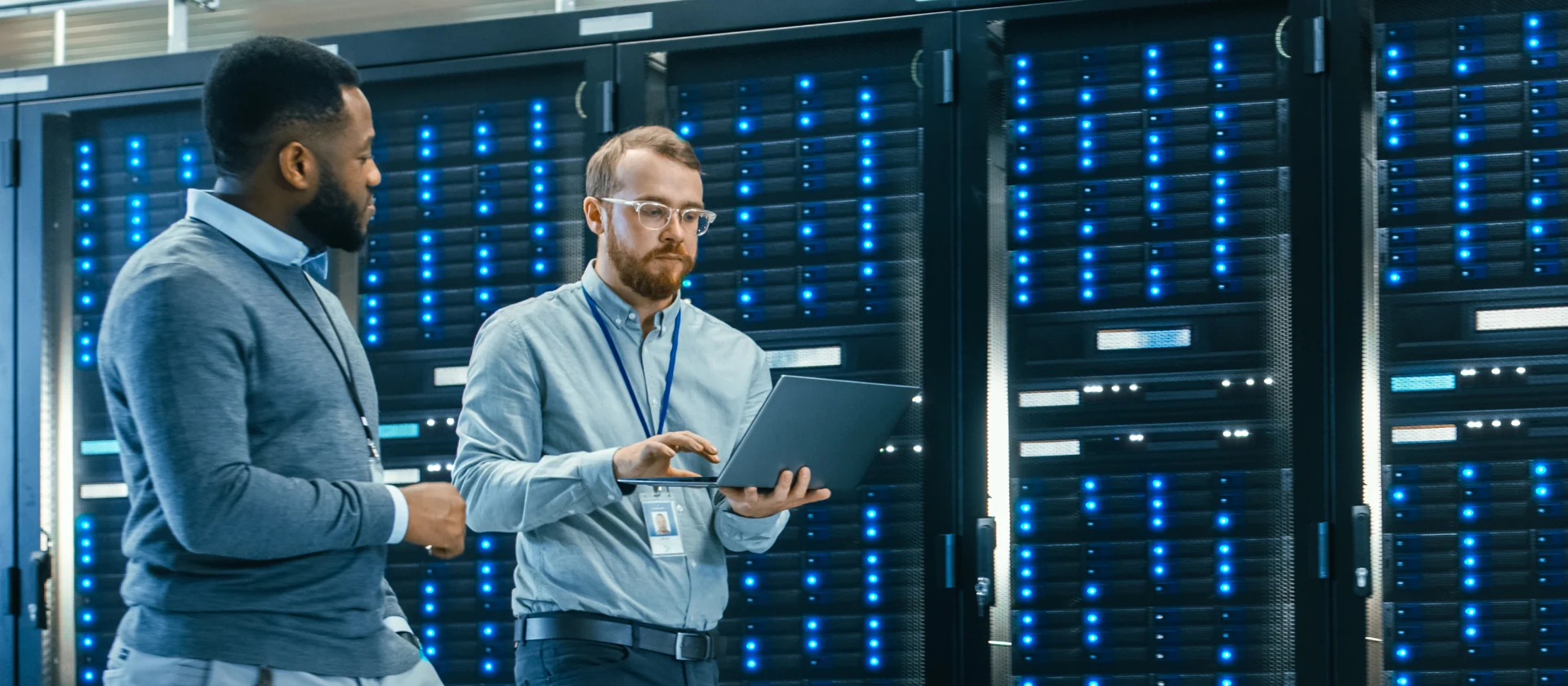
Uptime, availability and sustainability drive boardroom goals and KPIs. However, many data center facility teams lack the data, processes and tools to measure and tie their performance to corporate strategic objectives and customer service level agreements. For companies who design, build, operate and maintain data centers, W. Edwards Deming's quote from his book The New Economics rings true, "If you can't measure it, you can't manage it." This is especially relevant for many "hyperscalers" who focus on keeping up with growing customer demand.
The bigger picture
Data center operational success rates hinge on asset management solutions that predict the condition and performance of a facility's infrastructure. This maximizes availability and provides the reporting, autonomous actions and user dashboard features to support asset performance, reliability and sustainability goals.
The growth of generative artificial intelligence (GenAI) is one of many challenges to current data center operations and infrastructure. Forecasts for 2028 data center power consumption is close to 4,250 megawatts, an increase of 212 times over current levels.
At the same time, data center server infrastructure, plus operating costs, will exceed US$76 billion. This cost is estimated to be more than twice the annual operating cost of the leading cloud infrastructure services provider – which currently holds one-third of the world's cloud infrastructure services market, according to Trias Research.
How can companies compete and succeed in this market? The answer requires securing the energy necessary to meet the demand, but equally, it necessitates optimizing data center operations to function with a strategy of sustainability. This means you consume energy conservatively and in a manner that contributes to a higher corporate social responsibility (CSR) score.
Success rate relies on three key strategies:
Implement asset management solutions that plan for 24/7 reliability.
Predict the condition and performance of a facility's infrastructure to ensure unfailing functionality.
Provide reporting and dashboard features to support a reliable sustainability plan.
Lead with a strong foundation using asset performance management
To optimize data center operations, start with a strong foundation – and that begins with management of your facility asset performance.
A sound and robust enterprise asset management (EAM) solution extends the life of data center assets using sensors, predictive digital analysis and ideal planning, alongside replacement to gather insight into the condition and performance of the asset. It also responds to weaknesses or malfunctions and prolongs the life of the asset through proactive and predictive maintenance best practices.
This foundational layer is essential for managing individual assets over their expected mission time and doing the right maintenance at the right time to form a well-defined maintenance plan.
Finally, teams must record, categorize and make this information available to all stakeholders through customized dashboards that deliver the most useful information to each stakeholder.
Steps to achieve success
The first step in maximizing asset lifecycle value is to use an asset performance management (APM) strategy, which provides the analytical engine for decision-making support, so you can have clear visibility into the risk, cost, performance and availability of assets.
To strategically optimize data center operations, the EAM – as an installed or SaaS solution – must be reliability-centered and focused on the asset.
To maximize a data center's availability of the electrical, cooling and air handling systems requires implementing a two-prong strategy: eliminate known paths to asset failure and enact protections to mitigate the risk of unknown failures. These protections can be activity-based, condition-based or pattern-based.
Part of the strategy includes connecting to real-time data feeds and continuously monitoring the asset's condition relative to a model of expected behavior. Optimization comes when the solution builds its maintenance activities through the lens of reliability and how best to maintain assets over their lifecycle.
Ultimately, by monitoring and optimizing the strategy over time and in line with the actual asset's behavior compared to the model, and implementing robust protections to mitigate risk, clients gain a comprehensive understanding of their assets as a risk-informed portfolio. It also allows decision-makers to plan their outcomes around risk-performance and risk-cost trade-offs by correlating and integrating condition-based data sources so that insights are clear and actionable.
Best practice strategies integrate siloed condition-based data sources around an asset to provide a single-pane-of-glass view into the data center's assets, condition and behavior so that each asset maximizes availability across its lifecycle. The ideal solution maximizes asset lifecycle value by continually inquiring how the assets generate and deliver value to each layer in an organization and across their lifecycles. This enables long-term strategic decision support to help with capital investment planning and resource allocation.
There are four checklist items that confirm your EAM solution's success:
Avoid equipment downtime and unplanned events
Optimize maintenance spend
Lower operational risk
Standardize asset strategies
Reliability-centered maintenance that is optimized 24/7
Once a foundation is built, the second essential strategy for optimizing data center operations includes building a plan to keep the data center fully operational by carrying out reliability-centered maintenance. This means your data center is reliable, available and optimized 24/7.
Mission-essential facilities never sleep. A trusted solutions partner invests in the client's success with consultative-style engagement services where a subject matter expert (SME) team transfers its practical workplace knowledge to your company's personnel. SMEs need to gather in the early phase of implementation to review and optimize data center performance and availability by arranging early warning signals of failure using predictive analytics to ensure the client's team starts strong.
Choose a solution that equips your team and its priorities with cutting-edge technology to digitally transform your approach to facility continuity, heightened performance, productivity and utilization to seamlessly strengthen and secure operations for around-the-clock reliability. A world-class EAM solutions team maximizes your asset lifecycle value by unleashing intelligence at scale with a layered solution that balances the continuum of digital projects and digital assets on a spectrum that meets the needs of your data center, every step of the way. This step is essential to optimizing data center operations. When an organization embraces a reliability-centered maintenance strategy, it increases the uptime and reduces costly downtime events from an offline data center. Here, the urgency of vast access to electricity and power takes a front seat in the overall performance of the facility infrastructure.
Current technology helps secure a reliable power supply for data centers by preventing universal power supply failure to avoid all computers going down and taking the data center offline.
Part of this includes supporting all forms of RCM content to identify and mitigate data center failure risk consequences and providing a comprehensive audit trail on all activities performed using RCM methods.
Prioritizing sustainability that's visible to all
Supporting sustainability is top of mind for most large corporations on their journey to optimize data center operations. Data centers require vast amounts of energy, and that rises daily with increased reliance on artificial intelligence. Finding smart ways to operate with energy efficiency, manage waste responsibly and optimize resources reduces an organization's carbon footprint and increases your CSR score. Data center sustainability is at the core of this initiative for many large corporations.
Most boardrooms want to reduce their carbon footprint and make the world a cleaner, more sustainable place, and a CSR score also impacts your reputation and public stock. America's Most Responsible Companies 2024 list ranks 600 of the largest corporations in the U.S., with a focus on specific KPIs, such as reducing emissions, optimizing energy consumption and promoting diversity in management and board positions, according to Michael Bausch, a senior analyst at Statista.
"There is a discernible trend where an increasing number of companies are not only engaging in CSR practices but also actively publishing CSR reports," says Bausch.
The corporations making this investment receive the most significant value of optimizing energy consumption and reducing emissions. While the amount of energy that data centers consume can impact global climate goals in the world's top 1% largest corporations, using technology to bridge reliability and sustainability benefits the companies making this investment the most. In a connected, technology-driven world, the increase in computer processing needs will soon draw more energy from the grid than the grid can support. Energy sourcing is a huge issue for data centers, which makes achieving and reporting sustainability a key initiative for growing organizations.
Technologies should align strategic corporate goals with field activities and with asset and utility data. You should be able to set energy baselines to monitor and compare the energy performance of your assets against standards such as ASHRAE 90.1 and ISO 14001. By importing utility bill data in an EDI 810/820 format, data center teams can monitor and compare billing against actual asset energy consumption.
Energy is so essential that an increasing number of corporations are exploring building nuclear power plants to support the energy needs of local data centers. AI and other business initiatives require much more.
Hyperscale your data center to meet industry demands
The world's top 1% grossing corporations run multiple – sometimes a dozen or more – hyper scaled data centers, each using vast amounts of electricity to operate. According to a March 2024 report from the International Energy Agency (IEA), data centers consume as much as 1.5% of electricity globally, and they could consume more than 1,000 terawatt hours (TWh) of electricity in 2026 – more than twice the amount they consumed in 2022.
As such, some data centers are planning or building advanced nuclear reactors called Small Modular Reactors (SMRs) that can vary in size from generating tens of megawatts up to hundreds of megawatts for power generation along with other industrial uses, according to the U.S. Department of Energy.
This pushes sustainability to the top of discussions in boardrooms and the decisions corporations make when purchasing EAM solutions and optimizing data center operations.
It's all about the data
The boardroom has specific goals for sustainability. In our interconnected world, data centers require more energy than ever for efficient operations. However, this connectivity also brings increased visibility to the companies' actions, environmentally conscious or otherwise. Everyone wants to be a good citizen for shareholders, as a poor rating can directly reflect in the stock price. Companies develop challenging corporate goals for CO2 and GHG emissions.
CSR matters as a key foundational pillar to demonstrate an organization's values. Yet one question is distinctively louder: How can organizations operate with the unflappable confidence that systems collect, translate and assemble all structured and unstructured data, available 24/7 in real time?
The executive team and board of directors need to understand where and how data centers generate emissions to make increased operational efficiency a priority and reduce the corporation's carbon footprint. This combination of outcomes generates goodwill in local communities.
Partnering with an EAM solution that measures greenhouse gas emissions is a necessary step in creating meaningful sustainability processes and policies. Policies guide outcomes when they include GHG monitoring, measuring and accurate reporting to meet and stay in compliance with regulatory requirements. Robust solutions capture energy usage: they collect data from your meters and submeters and compare that information to utility bills via the information that arrives via an EDI, 810 or 820 format. They add to that the results from combining building information management (BIM) and utility data.
To optimize and hyperscale a data center is a significant undertaking. Success begins with a robust APM framework that links inextricably to corporate objectives. Next, it requires building a strong reliability-centered EAM foundation to carry out proactive maintenance, before swiftly moving forward with a commitment and the tools to drive sustainability. This three-prong approach creates a trusted map to strategically deliver effective results.