Challenges
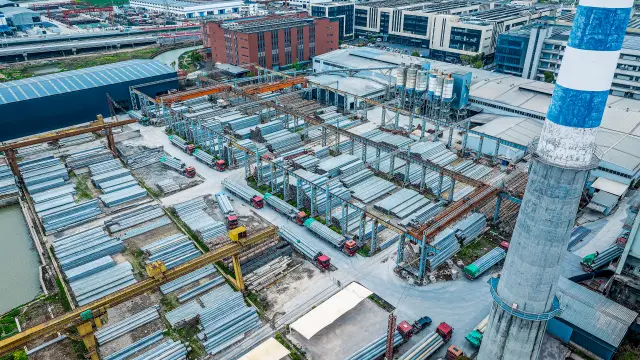
Octave Loop Material Readiness (formerly Jovix) was deployed in 2011 at an EPC firm’s offshore construction site in coastal Texas. Functionality included material receipt, request, location and issue. Savings from Loop Material Readiness track and trace led it to add preventative maintenance and inspections (PMI) functionality. Below, learn more details about cost savings generated by efficiency, accuracy and a reduction in direct and indirect work hours.
Jobsite challenges
Time to locate a material: 45 minutes at $65 per hour (average)
0.2% of materials were lost;
re-procurement at $2,000 per spool (average)
0.1% of owner-furnished equipment was lost; replacement at $4,000 each (average)
Solution
Analytics and reporting within Octave Loop Material Readiness pulled the following information:
71,624 pieces tagged with active RFID; associated material data entered into Loop Material Readiness
66,173 tagged materials were picked in the first 4.5 years of Loop Material Readiness deployment; not a single tagged asset was lost
Analysis of the data resulted in the following conclusions:
Client saved 0.667 work hours for each material located
0.667 work hours reduced per 66,000 materials saved the client $2,867,496
With zero assets lost, client avoided $264,692 in re-procurement costs
Savings through added functionality
The time and cost savings realized through the Loop Material Readiness track and trace implementation were used to justify expanding the implementation into other processes and activities on the project.
Savings beyond location
The initial investment in hardware had already been accounted for and justified by savings realized in material location. Therefore, it only made sense to incorporate additional Loop Material Readiness functionality that could result in more cost savings. The additional investment would be much lower than the initial commitment, and total savings would be significant.
Preventative maintenance and inspections
The path forward at this facility included PMI functionality, and the implementation proved so successful that Loop Material Readiness became the district standard for PMI activities. It’s now sold as a value-added service in this fabricator’s tool kit. Unlike most PMI solutions, Loop Material Readiness also features preservation functionality. Coupling two functions drives efficiency by enabling material activities, such as receipt, to automatically trigger an inspection task. Preservation activities automatically update materials management information. For example, if an asset fails inspection, Loop Material Readiness can automatically place it into quarantine status. With Loop Material Readiness PMI functionality, the client was able to perform the following tasks:
Build inspection templates
Upload supplier requirements
Create recurring inspections
Set reminders and alerts
Assign inspection to a user
Locate equipment requiring maintenance
Collect photos and digital signatures
PMI with the Loop Material Readiness solution decreased indirect labor costs by reducing material location time and removing manual data entry. Loop Material Readiness also streamlined scheduling and reporting, eliminating the need for personnel dedicated to those functions.
Additional functionality
The client also incorporated the following value-added services:
Enterprise resource planning (ERP) tool integration
Fabrication tracking with active and passive RFID tags
Steel fabrication software integration