The family-owned Heerema Group was incorporated in 1948. The Heerema Group has developed itself into an international player in the offshore oil & gas industry and the construction and infrastructure markets.
The Heerema Group consists of four autonomous entities that each provide specific input within the joint areas of the Group. The potential synergies and connections provide the Heerema Group with the people and resources to provide solutions for complex technical projects. The Heerema Group employs 2,400 personnel worldwide and has an average turnover of € 0.7 billion.
The challenge
The Heerema Group, a Dutch construction company, is one of the leading construction companies working in the international oil and gas industry today. The company has four divisions – Heerema Marine Contractors, Dockwise, Intec Engineering and Heerema Fabrication Group (HFG), which specializes in offshore fabrication. Heerema has been providing solutions for some of the world’s most complex technical projects since it was founded.
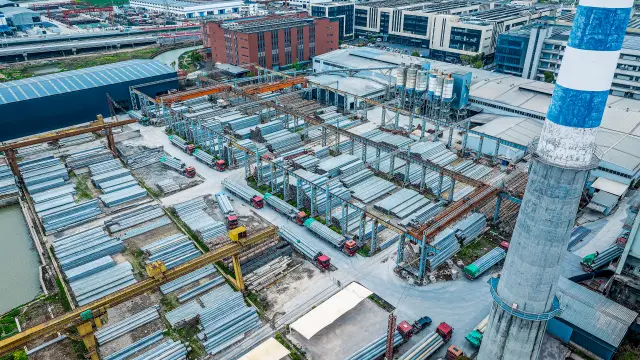
HFG builds large, complex facilities for the oil & gas industry, such as offshore platforms, topsides, decks and jackets. With three yards situated around the North Sea at Hartlepool in the U.K. and Vlissingen and Zwijindrecht in the Netherlands, HFG has the resources to construct facilities up to 10,000 tons in weight at any one time.
In any construction project, the accurate flow of fabrication data from the engineer to the fabricator is of vital importance. Inaccuracies can lead to significant project delays and expensive rework costs that can result in millions of dollars being spent over budget.
One of the key data sets for any fabrication project is the information relating to the piping systems that need to be constructed. Typically, the engineering contractor supplies this piping data in IDF or PCF files, which come directly from the 3D system used to design the construction. The fabricator then adds the necessary fabrication and construction information and generates all the necessary spool drawings and reports for the workshop to construct the pipes.
“We invested in a software package to do this, but found it outdated,” said Herman Slot, ICT Manager at Heerema Zwijindrecht. “The vendor didn’t provide adequate technical support either. One major bug in the winter of 2002 caused our projects to be held up for a month while a fix was being looked for. We simply couldn’t go on like that.”
The project objectives
Assure accurate flow of fabrication data from the engineer to the fabricator
Quickly and accurately construct project piping information data sets
Take Piping Component Files (PCFs) supplied by the engineering, procurement, and construction
(EPC) contractor, create spools and add the required construction information
Create shop isometrics easily to speed productivity
This improves productivity in the fabrication workshop, eliminates waste and surplus material and ensures the right modules get to the construction site at the right time and with the correct erection materials, which in turn benefits the owners; engineering, procurement, and construction firms; and fabricators.
Moving forward
In 2003, Heerema Zwijindrecht was awarded a major contract by Statoil to build the slug catcher and monoethylene glycol (MEG) facilities for a liquified natural gas (LNG) plant on MelkØya Island off the coast near Hammerfest in Norway. The plant converts gas piped ashore from the SnØhvit field deep beneath the east Barents Sea before being shipped by special gas carriers to Spain and the U.S.
Statoil stipulated that the slug catcher and MEG facility had to be delivered by spring of the following year to meet the construction schedule.
“We urgently needed a new software package that would take PCFs from Linde, the EPC company contracted to the SnØhvit Project and allow us to create spools and add the necessary construction information,” said Herman.
“We analyzed the market, checked which packages our subcontractors and suppliers used, and finally created a short list of two alternatives.”
“One of our subcontractors had achieved efficient cost savings with OnSite Spool Design, and there were also sufficiently experienced engineers who knew the tool and could deliver ISOs in the correct data format,” said Herman. “After a demonstration of OnSite Spool Design’s capabilities, our team felt confident it was the right tool for the job – a belief that has proved correct.”
The delivery of the first MEG module was scheduled for April 1, 2004, and it was delivered on time at MelkØya Island. By the end of July, the other three MEG modules and the slug catcher had been delivered from Heerema’s Zwijindrecht facility – totaling more than 15,000 tons of construction.
According to Statoil, record-fast delivery, on schedule and on budget, along with a good health, safety, and environmental record, were key features of the SnØhvit deliveries from Heerema. It stated that module deliveries of this type and on such a large scale had never been carried out within such a short timetable.
OnSite Spool Design is now integral to Heerema’s fabrication business. The product is used in all the company’s construction projects for the production of drawing shop isometrics and spools.
According to Willem Jan Pons, one of Heerema’s senior piping engineers, Intergraph Spoolgen enables the easy and fast creation of shop isometrics, resulting in enormous productivity gains. Herman concurred, saying, “OnSite Spool Design saves an enormous amount of time for shop engineering, and subsequently the cost savings are very significant, plus it’s very easy to use and the technical support we receive is excellent. Deciding to invest in OnSite Spool Design was an important step forward for Heerema.”