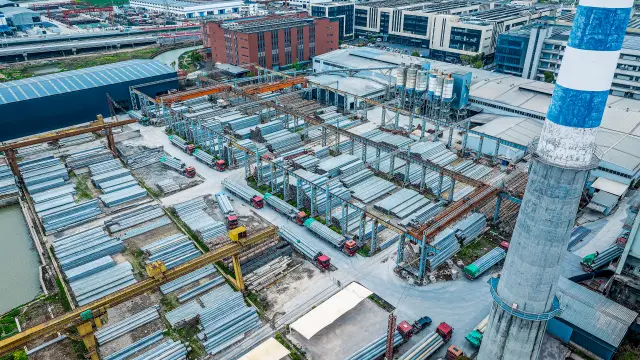
Using Loop Material Readiness from Octave, a Canadian oil sands refinery owner gains unprecedented material visibility across multiple contractors.
This refinery project was comprised of multiple EPC firms and included an initiative to provide project-wide material visibility across multiple units and multiple contractors. The project owner selected Loop Material Readiness to support that initiative. The primary objective of this enhanced visibility was to provide the owner/operator with additional cost and schedule certainty. In addition to serving as the project’s visibility tool, the owner also funded the transactional use of Loop Material Readiness and RFID tags for contractors, to drive transactional efficiencies through digitization and automation.
This project has a complex supply chain that includes multiple fabricators, marshalling yards, laydown yards, and material warehouses, of which some are shared between EPCs. Using Loop Material Readiness from Octave project-wide ensured complete visibility throughout the entire material lifecycle, from fabrication to installation. Loop Material Readiness serves as a comprehensive tool for the project owner, with robust functionality in reporting, trending and predictive analytics that can be easily configured to see the entire project at once or specific sets of information, down to the smallest individual material detail.
Pain points
Jobsite challenges before the Loop Material Readiness implementation included the following:
Lack of owner visibility into materials management challenges across a multi-contractor project
Reactive decision-making based on outdated data from static reports across multiple contractors
Multiple units and multiple contractors with different materials management systems and processes
Inefficient and error-prone, paper-based materials management processes
Inaccurate and outdated material data resulting from manual, error-prone data entry
Inefficient and cumbersome cross-scope coordination involving multiple EPCMs, contractors and suppliers
The solution
Complete owner visibility of planning, productivity and performance across multiple contractors
The owner/operator adopted the Loop Material Readiness solution that combines hardware, software and professional services to address specific project challenges where traditional materials management processes fall short. This complex, multi-contractor project with a global supply chain required more than a simple material track and trace solution. For them, location was just the beginning. Loop Material Readiness is the cross-coordination tool that provides complete material visibility throughout the entire project lifecycle. Most importantly, Loop Material Readiness digitizes material data and brings it into a single solution owned and operated by the project owner. When all material data across multiple contractors’ systems is accessible to the owner/operator through a graphical, user-friendly interface, true visibility is accomplished.
The Loop Material Readiness Implementation Team worked closely with all project stakeholders to enable data exchange in the most efficient and seamless method possible, with all EPC firms providing data to Loop Material Readiness on a recurring basis.
Because Loop Material Readiness was designed to support complex multi-site, multi-contractor projects, the project owner can slice and dice the project’s material data with total transparency, accessing trending information on a large scale or focusing on a specific piece of material. The Octave Professional Services Team collaborated with key project stakeholders and the owner/operator to create additional functionality within the solution to enhance owner-focused visibility through a set of import templates. The project owner is now able to consume data from all EPC systems.
The following is an elaboration of functionality developed in partnership with the owner/operator that is now available to all Loop Material Readiness users. Included in each section is the problem, solution and results for each use case.
Streamlining inspections & preventative maintenance processes
Maintaining the quality of critical materials is paramount to ensure the safety and performance of specific items
Pain point: The project owner is ultimately the most interested in driving inspection and preventative maintenance compliance and documentation. With a traditional turnover approach, material preservation data is transferred in a manual, inefficient process. This leads to limited owner visibility into, and influence over, compliance. This challenge is increased in the case of this project in which there are materials being managed across multiple contractors.
Solution: The Loop Material Readiness solution includes functionality for inspections and preventative maintenance that is tightly coupled with the core Material Readiness functionality, which drives efficiency by enabling activities such as a receipt to automatically trigger an inspection task, for example. Further, if a material fails inspection, Jovix can automatically place that material into quarantine status to remove it from the available materials and update workface planning data. This functionality is valuable for contractors and owners who are using Jovix to perform inspections and maintenance activities.
Loop Material Readiness can also be used as an inspection and maintenance compliance tool. Loop Material Readiness consumes raw data from the contractors’ systems and then presents this data to the owner/operator in a graphical dashboard format. This visibility enables owners to detect and correct inspection compliance issues before they impact material availability and, ultimately, construction productivity.
Results: Maintaining the quality of critical materials is paramount to ensure the safety and performance of a specific item. It is also important to collect and access historical preservation information on an item from the time it is accepted on-site through construction and into operations. With the Loop Material Readiness preventative maintenance functionality, users are able to:
Build inspection templates
Upload requirements from suppliers
Create recurring inspections
Assign inspections to users
Locate equipment requiring maintenance using GPS and RFID
Collect pictures and digital signatures
Edit images within the transaction such as cropping, brightening, circling problem areas and making notes
In addition to the ability for contractors to perform these transactions in Loop Material Readiness, the owner now also has complete visibility into inspection and preventative maintenance compliance, project-wide. This level of visibility and quick access through the dashboard widget is unprecedented.
Supporting workface planning with material readiness
Project owner gained a more accurate and timely view of productivity, performance and preparedness
Pain point: According to Construction Owners Association of America (COAA), workface planning with integrated Loop Material Readiness has shown to increase craft productivity by 25%.
With traditional progress reporting from contractors, it is not possible to assess the level of workface planning preparedness. This issue is exacerbated in the case of this project, where there was a lack of visibility into workface planning across multiple contractors and units, each using their own work planning process pertaining to their purchased materials.
Solution: The Loop Material Readiness solution includes a forecasting feature to predict future materials management issues by comparing supply data from purchase orders and shipments with demand data from work packages. This work planning functionality provides complete visibility into current and projected material availability, providing the owner/operator with visibility into the contractors’ plans. For EPCs, the automated material allocation, combined with forecasting and predictive analytics, provides Loop Material Readiness with the ability to quickly identify future materials management issues before they impact each contractor’s plan.
It is increasingly important for large-scale projects to have strong, collaborative tools for coordination across multiple contractors and units. Integrated solutions are key to effective collaboration, and the burden sits with project owners to drive data requirements. Forward-thinking contractors have also embraced integrated solutions that provide increased accuracy and productivity for the entire project, not just their part of it. These EPCs will be well positioned when owner/operators begin to mandate enhanced data requirements as this technology becomes mainstream.
Results:
Project owner gained a more accurate and timely view of project productivity, performance and preparedness
Project owner achieved visibility into contractors’ use of workface planning and integrated Loop Material Readiness
Contractors eliminated paper-based processes and replaced them with real-time material data collection at the point of transaction through auto-ID technology, such as active and passive RFID tags, GPS tags and barcodes, which ultimately enabled superior planning
Improving heavy haul shipment coordination through communication
Loop Material Readiness enables proactive decision-making to solve issues before they impact construction
Pain point: When any load exceeds a certain dimension (length, width, height or weight) or presents an irregular loading pattern that requires a specialized trailer, it becomes a “heavy haul” item. Heavy haul items require advanced planning for shipment, offloading and handling.
The Heavy Lift Coordinator for this project is an employee of the project owner and is responsible for time and assets required to escort and lift the load from the trailer into place on the jobsite. According to the owner/operator, there are an estimated 1,500 heavy lifts throughout the lifecycle of this project. The most complex aspect of this coordinator’s role is cross-scope coordination across all EPC firms across all units.
The project goal is to have a three-week heavy haul lookahead capability to allow time to coordinate all facets of heavy haul shipments. Each heavy haul shipment lift requires special coordination and permitting actions both on-site and throughout the shipping process. The shipping carrier - whether road, rail or ship - must adhere to the regulations of any port of call, municipality and transit authority involved in the transportation of the item. The coordinator is responsible for coordinating these regulations within the shipping company and any special rigging, lifting, staging, permitting and personnel requirements once the item reaches the site.
In addition to the regulations, the owner’s Heavy Lift Coordinator is also ultimately responsible for maintaining positive community relations as the materials move through these various ports and municipalities, no matter which EPC owns that particular shipment. From small towns closing off their main street for a large delivery to pass through, to temporary road and bridge closures through Calgary and Edmonton, careful coordination and good working relationships are imperative to minimize the impact these large loads have as they pass through.
All the EPCs working on the project have heavy haul shipments. It is the project owner’s responsibility to coordinate the heavy haul traffic across their multiple scopes.
Previously, all coordination of heavy haul shipments across contractors and units was performed manually through phone calls, emails, spreadsheets and PDFs. This manual process introduced lags in decision-making plus errors from manual data entry and exchange.
Solution: The owner operator and Octave Professional Services Team worked together to configure a three-week look-ahead heavy haul report with a corresponding dashboard widget. The report encompasses all heavy haul information project-wide, providing cross-scope coordination and complete owner visibility in real time. The report leverages material purchase order information, expediting information and the updates provided when a material moves through the supply chain. That data is pulled into a single system, Loop Material Readiness, and managed by the project owner.
With this reporting capability, the coordinator is able to easily manage by exception by configuring the report to show only certain information needed to highlight issues and allow for better decision-making. With access to this data project-wide, owner management can be alerted to non-conforming material data. For example, if a bridge closure will delay all major shipments for two weeks but a particular heavy haul item has not been updated with that delay, the coordinator is alerted that the material is not being properly expedited.
The heavy haul report is accurate, timely, easily configurable and available with one click on the dashboard widget. Through an import template, all EPCs are able to easily import and export material data from their systems in and out of Loop Material Readiness in order to comply with owner requirements. The Octave Implementation Team worked closely with all project stakeholders to enable imports in the most efficient and seamless method possible.
The Heavy Lift Coordinator’s work processes have been drastically changed, and this heavy haul functionality has taught everyone involved in this process that this role has been undervalued and often reduced to playing “traffic cop” across EPC firms and units. With automation and site-wide compliance, the coordinator’s daily responsibilities have shifted from comparing dozens of printed spreadsheets and making dozens of calls each day to an efficient and proactive approach to true coordination.
Results:
Unprecedented owner visibility into heavy haul shipment data across multiple contractors
Reduction of one full-time equivalent worker who would traditionally be required in order to handle all of the heavy haul information
Total heavy lift material visibility for owner’s representative across all contractors
Graphical interface with user-friendly, configurable dashboard widget that enables management by exception
Reporting features that enable proactive decision-making to solve issues before they impact construction
Project return on investment
The business case for the Owner Site Material Tracking and Control Program is based on risk mitigation, cost avoidance, schedule assurance and improvements in efficiencies of direct and indirect labor.
Avoidance of “temporarily lost” material
Improving efficiency of cost-reimbursable construction contractors
Mitigating risks to the project schedule and budget by avoiding material availability issues (MWR Shorts Report)
Project wins:
Visibility across all EPCs and contractors (single source of truth)
Heavy Haul Report
Asset tracking
Inspections and Preservation Program
Picking efficiencies
Work packages
Surplus management
Material Shorts Report
Conclusion
This project owner is a leader in the owner operator market and is setting the example of what’s possible when adopting an enterprise solution that enhances complete visibility into today’s complex global project landscapes. Loop Material Readiness and this project owner continue to work together to develop new functionality that responds directly to the needs of today’s large capital assets in the construction and operational phases that benefits the entire industry from owners to EPC firms, contractors, fabricators and suppliers. Collaborative tools are a key component to greater efficiency and productivity in this industry.